Your contractor will spend more of your money, and make more decisions you never see, than anyone else on your project. Choosing one on price alone, or on a relative’s recommendation alone, is how good plans turn into stalled sites. Here is how to choose with your eyes open.
Decide what you are actually buying
Construction contracts in Telangana usually fall into three types, and quotes for one are not comparable with quotes for another:
- Labour-only: the contractor supplies workers and you buy every bag of cement and every bar of steel. Cheaper on paper, but you carry the buying, storage and wastage risk, and you need to be on site often.
- Material and labour: the contractor supplies both, to an agreed specification. One point of responsibility, provided the specification is written down properly.
- Turnkey or design-and-build: one firm handles design, approvals, construction and finishing. The least effort for you, so choosing the right firm matters most.
Look at their sites, not just their photos
Any builder can share an album of finished elevations. What you need to see is a running site, ideally without much notice. Look for:
- Cement bags stacked on a raised platform, under cover and away from walls.
- Cover blocks under the reinforcement, so steel does not sit directly on the shuttering.
- Slabs and columns being cured with ponded water or wet hessian, not left to dry in the sun.
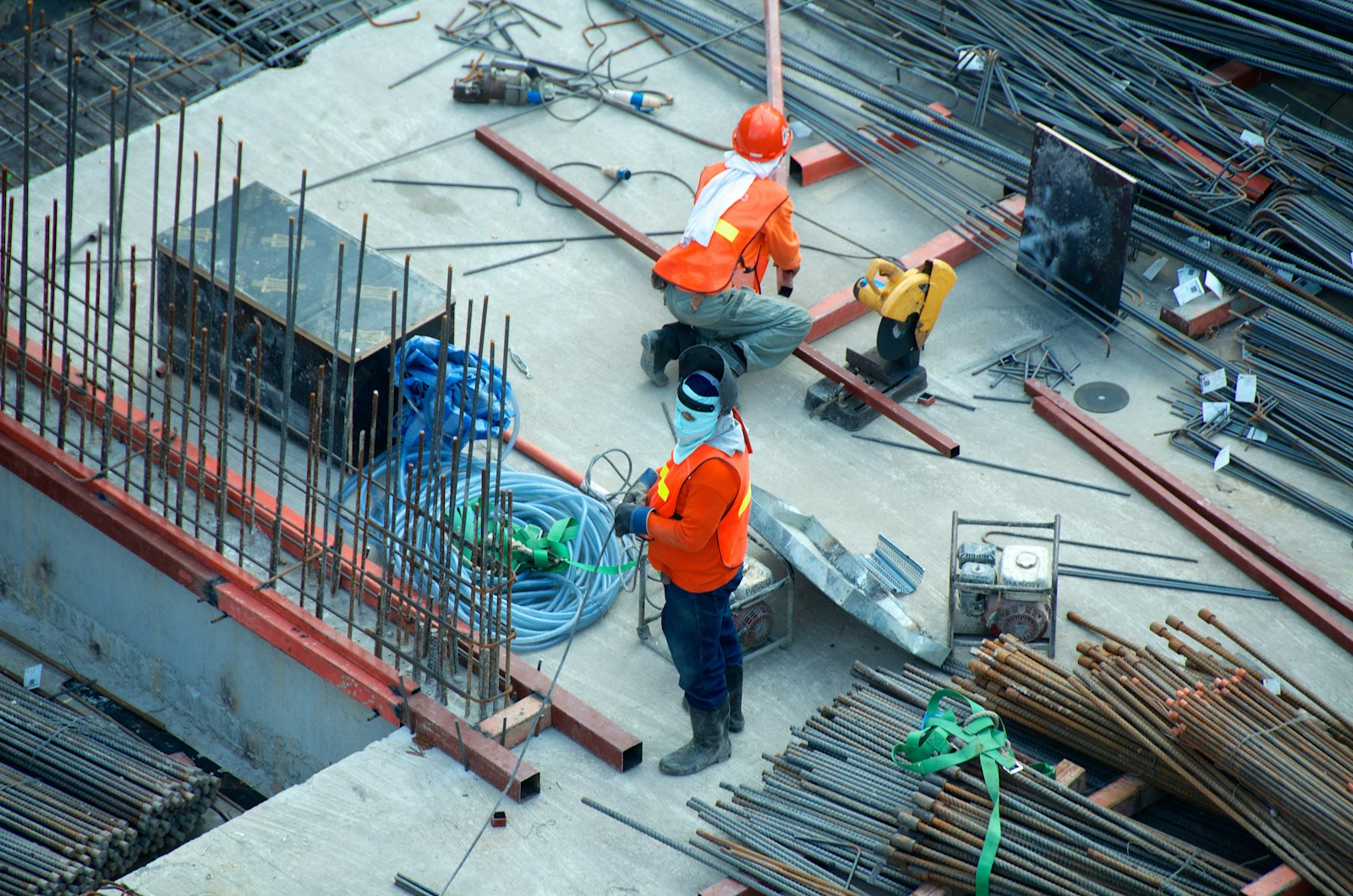
- Helmets, footwear and edge protection on upper floors. How a contractor treats safety is how they treat details.
- An engineer or supervisor on site who can explain the drawings.
Then speak to two or three past clients. Ask what went wrong and how it was handled. Every project has problems; what you are judging is the response.
A good contractor will happily walk you through a running site. One who only shows you photographs is telling you something.
Check the engineering behind the quote
Ask who prepares the structural design, who checks reinforcement before each pour, and whether concrete cubes are cast and tested. A competent builder should talk about M20 or M25 concrete, Fe500 or Fe500D TMT steel, slump tests and curing periods without being prompted. If most technical questions get “don’t worry, we have done many buildings”, keep looking.
Compare quotes line by line
A per-square-foot rate means little until you know what it includes. Ask every bidder to fill in the same specification sheet, then compare them side by side:
| Item | What to pin down |
|---|---|
| Cement | Brand, type and grade (OPC 53 or PPC), and where each is used |
| Steel | Brand and grade (Fe500 or Fe500D), ISI-marked, with test certificates |
| Concrete | Grade for footings, columns and slabs; site-mixed or ready-mix |
| Walls | Red brick, fly ash brick or AAC block, and wall thickness |
| Finishes | Flooring, sanitaryware and electrical allowances in ₹ per unit |
| Exclusions | Compound wall, sump, borewell, approvals and service connections |
Watch the allowances. A quote with a flooring allowance of ₹40 per sq ft looks cheaper than one with ₹80, until you visit the tile showroom.
Red flags
- A rate far below every other bid, with vague specifications such as “branded cement”.
- A large advance before any work starts, well beyond mobilisation costs.
- Reluctance to sign a written contract, or cash-only payments with no bills.
- No named engineer or supervisor for your site.
For government and panchayat works, contractors must hold the appropriate state registration class. For private work, at minimum confirm GST registration and a PAN in the firm’s name, so your bills and payments are traceable.
Put it all in the contract
A written contract protects both sides. At a minimum it should cover:
- Scope of work, with the approved drawings and specification sheet attached.
- A BOQ with rates, and how extra or changed work will be priced.
- A timeline with milestones: plinth, each roof slab, masonry, plastering and handover.
- Stage-wise payments linked to those milestones, released after inspection.
- A retention amount, often around 5%, held for a defects liability period, commonly 12 months.
- Who provides water and power, who removes debris, and who is responsible for labour safety.
Judge the communication early
How a contractor behaves during quotation is a preview of the next twelve months. Did they visit the plot before quoting? Did they ask about your soil, approvals and family’s needs? Do they offer weekly photos, a short progress report and one person to call? Choose the team that asks good questions, not the one with the quickest answer.